Sardinia doesn't want to just focus on August, can beach seafood and culture cater to Chinese tourists?
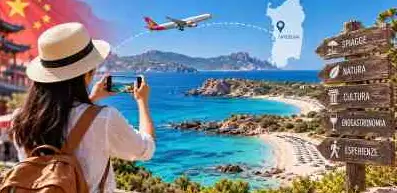
Sardinia wants to extend its beach tourism season, and this time its focus is on the Chinese market.
The latest data shows that after a round of online promotion by Sardinia and Huawei, the number of people searching for "Sardinia" online has increased by 90%, and the booking volume of online travel agencies has more than doubled, increasing by 108%.
The promotion period is from mid May to mid June this year, jointly conducted by the Tourism Department of Sardinia Autonomous Region and Huawei's Jinghong Kinetic Energy Advertising Platform. Huawei phones have been exposed 21 million times, and advertisements have also been placed on the screens of airports, subway stations, and commercial districts in Shanghai and Beijing, covering over 8.6 million people. They also found six Chinese bloggers to post content on Tiktok and Xiaohongshu, and took 3.5 million more exposures.
The effect is quite obvious: after promotion, the number of Chinese tourists visiting Sardinia increased by 5.4%, and the average stay time also increased by 13.6%.
For seaside shops, doubling their booking volume is certainly exciting, but what excites them even more is that Chinese tourists may help them break the old habit of "only doing business in summer".
Previously, the beach business in Sardinia relied mainly on European tourists who came to bask in the sun in July and August. After summer, when there are fewer people, the store has to close. The government's proposal this time not only includes the sea, but also includes historical archaeology, ancient towns, cuisine, and outdoor hiking. The beach is no longer just a place to lie down and bask in the sun, but a part of the entire tourism journey. When the weather gets cold, you can't go into the sea, but tourists can still come for culture and food.
However, when the opportunity arises, it does not mean that the money will be obtained. According to Huawei's data, over 80% of people who click on advertisements come from first tier cities in China, and nearly 90% are willing to spend money on traveling. But this is just 'interested'. From giving a like on your phone to actually booking a flight or ranking itinerary, there are also practical issues such as visa inconvenience, availability of direct flights, and cost-effectiveness of hotel bookings.
The needs of Chinese tourists are also different and cannot be generalized. Seaside shops need to keep up with their service to catch up with this business. For example, Chinese instructions, a user-friendly booking system, or creating autumn and winter experience packages with local hotels and tour guides. Relying solely on a seafood restaurant or renting an umbrella stall cannot sustain the entire experience, and the entire tourism route must be worked together.
Now it seems that this wave of online marketing has made a good start. But whether online popularity can become a real normal passenger flow depends on the actual number of arrivals and consumption data in autumn and winter. Sardinia's attempt this time not only found a new path for itself, but also set an example for Italian beach tourism: how to turn beaches from "summer exclusive" to "all year round".